A Primer on the USPTO as the Central Bank of Innovation
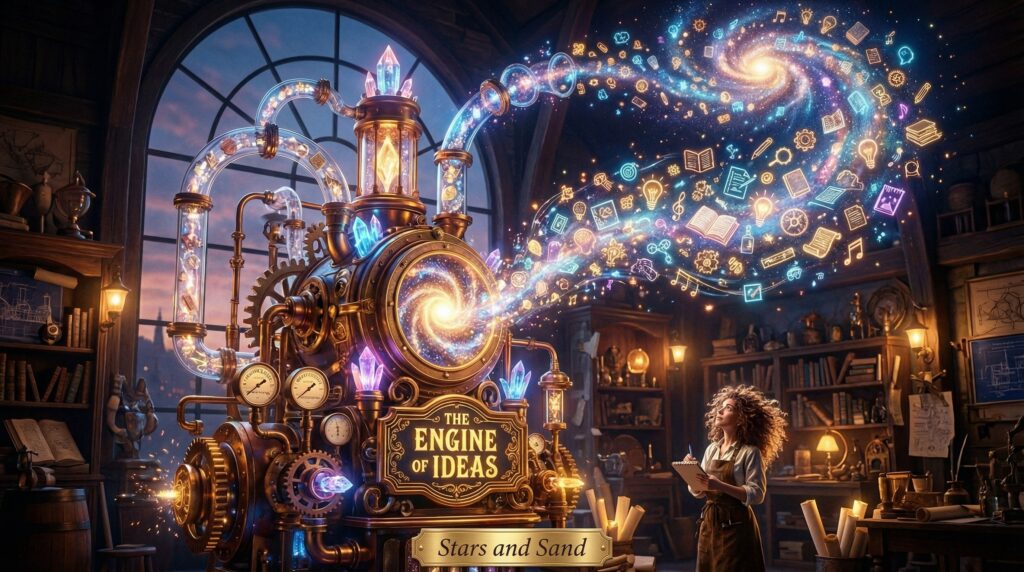
1. The Big Picture: What is a “Central Bank of Innovation”?
To understand the modern economy, we must look past the flow of money and see the flow of ideas. While a traditional central bank, like the Federal Reserve, manages the stability and circulation of financial capital, the United States Patent and Trademark Office (USPTO) performs a nearly identical role for our “knowledge economy.”
“Just as a central bank stabilizes the flow of capital into the real economy, the USPTO stabilizes the flow of innovation into the knowledge economy. With ‘born strong’ protection, new ideas soon blossom in a marvelous virtuous cycle.”
This Virtuous Cycle is the secret sauce of American prosperity. When the USPTO provides strong, predictable protection for an idea, it gives inventors the confidence to share their breakthroughs. This protection transforms a “tinker” into a “blueprint,” attracting the investment needed to build new businesses and ultimately delivering the growth that sustains our national prowess. The USPTO doesn’t just process paperwork; it validates the ingenuity that makes our economy move.
Transition: To understand how this bank functions, we must look at its two primary manufacturing centers, where raw ideas are forged into legal armor.
——————————————————————————–
2. The Two Great Foundries of Ideas: Patents and Trademarks
The USPTO operates as two distinct “foundries” that create the legal architecture for the global marketplace. While one captures the sparks of the garage, the other protects the reputation of the storefront.
| The Foundry (Patents) | The Branding Agency (Trademarks) |
| Primary Focus: Technical breakthroughs, scientific inventions, and the “blueprints of the future.” | Primary Focus: Brand identity, logos, names, and the “face” of the business. |
| Ultimate Goal: Protecting new technology and technical ingenuity (America’s Invention Agency). | Ultimate Goal: Market stability and protecting source-identifying rights (America’s Branding Agency). |
| Real-World Impact: Ensures a new engine or life-saving drug belongs to its creator. | Real-World Impact: Ensures consumers know exactly who made the product they are buying. |
Both foundries are essential to move an idea “into the real world and at scale.” Without patents, there is no incentive to solve the world’s hardest problems; without trademarks, there is no way for a business to build a reputation that consumers can trust.
Transition: Once an idea passes through these foundries, it undergoes a radical transformation from a simple piece of paper into a powerful economic engine.
——————————————————————————–
3. The Alchemy of an Application: From Paper to Prosperity
An intellectual property application is more than just a legal filing; it is a “unit of intellectual property” that the USPTO puts into circulation. This journey follows a specific, alchemical sequence:
- The Application: It begins as a spark of ingenuity—a “tinker” or a “dream” documented on paper.
- The Investable Asset: Once validated, that paper becomes a tangible asset. This is the stage where a legal right allows an inventor to attract the capital (money) needed to bridge the gap between a prototype and a product.
- The Real-World Outcome: Finally, the asset translates into four specific engines of prosperity:
- A Job: New technologies require a workforce to build, sell, and maintain them.
- A New Business: Startups are often built entirely around the bedrock of a single patent.
- A Competitive Advantage: Helping American companies lead the “onrush” of technology on the global stage.
- A Life-Saving Drug: Providing the security needed for years of expensive, high-risk medical research.
The “Born Strong” Standard For this alchemy to hold, a patent must be “born strong.” If a patent is weak or ambiguous, it can be “gang tackled” by competitors through “serial filings”—repeated legal challenges designed to wear down the inventor. A strong patent provides “Quiet Title,” acting as a shield that allows a small inventor in a garage to survive against global giants.
Transition: This transformation isn’t automatic; it requires a functional machine that needs its own “fuel” to clear the hurdles of the modern age.
——————————————————————————–
4. The Business of Innovation: Fuel (Fees) and Friction (Backlogs)
Unlike typical government agencies, the USPTO is a self-funded institution. It operates with the agility of a business to keep pace with the speed of invention.
- The Fuel: Through fee-setting authority, the USPTO generates the resources it needs to operate. These funds are embargoed, meaning they are protected from being spent by other agencies. This ensures “inventor-funded progress” and prevents taxpayer waste.
- The Friction: When tools are outdated, the system develops a “choke.” Currently, the USPTO faces a massive backlog of 837,932 unexamined applications.
- The Human Constraint: This friction is felt most by the examiners, who often have only 17 to 18 human hours to evaluate applications that can now contain thousands of complex claims.
- The Global Stakes: A backlog is like a “cloud” over a real estate title; you can’t build on it if you don’t truly own it. This uncertainty creates a massive risk for “onshoring” manufacturing. In the US, a company has 100% exposure to patent laws, whereas offshore manufacturing carries only 20% exposure. To keep the next 250 years as prosperous as the first, we must make the US a “safe harbor” where invention is predictable and title is clear.
Transition: To clear these clouds and supercharge the workforce, the USPTO is deploying the most powerful tools in human history.
——————————————————————————–
5. Supercharging the Examiner: AI as a “Cadre of Agents”
The USPTO is not replacing human experts with robots. Instead, it is providing them with “superpowers”—using AI as a “cadre of agents” that an examiner can deploy to handle the heavy lifting of the digital age.
- [ ] Search Modernization: Replacing five months of manual “jungle-whacking” in the archives with a five-second digital epiphany using agentic AI classification.
- [ ] The Intuition GPS: Delivering a “top 10 list” of prior art to patent examiners before they even begin their first review, creating a faster, more accurate pathway to approval.
- [ ] Register Integrity: Using AI to identify and purge over 70,000 fraudulent or baseless filings from the trademark register in less than a year.
Key Insight: The USPTO maintains a strict “Human in the Loop” requirement. AI acts as the high-speed scout, but the final decision on whether a dream is worthy of protection remains with the expert human examiner.
Transition: These tools are the front line in maintaining the integrity of the American Experiment.
——————————————————————————–
6. Conclusion: Maintaining the Global Lead
The USPTO is the guardian of the American dream. By pursuing an “America First” IP agenda, the office ensures that foreign competitors who “flood the zone” with low-quality filings cannot undermine the system that fuels our economy.
By modernizing its machinery and stabilizing the flow of ideas, the USPTO ensures that “tinker by tinker, breakthrough by breakthrough,” the United States remains the most investable nation on Earth.
Key Takeaway: By functioning as the Central Bank of Innovation, the USPTO turns the sparks of human ingenuity into the tangible wealth of a nation, ensuring that the American dream remains a protected, predictable, and investable reality.