A Post-AIA Blueprint for the Global IP Hunger Games
Intellectual property is no longer a legal framework; it is a theater of geopolitical and commercial warfare. Under the current regime, the USPTO has completed its consolidation of power. Transitioning from a service-oriented bureaucracy to what Director Squires explicitly labels the “Central Bank of Innovation.” This signifies the closing of the vault. For the elite investor and the venture architect, the “knowledge economy” is being re-indexed to favor a specific class of “preferred actors.” If you are not inside the vault, you are the liquidity being harvested.
1. The New Architecture: From “Invention Agency” to “Central Bank”

The strategic pivot of the USPTO is an overt declaration that patents are now “innovation currency.” Patent owners stabilize or liquidate patents based on national interest. This “America First IP Agenda” is not a suggestion. It is a directive to onshore manufacturing by weaponizing the agency’s independence. Unlike the rest of the federal government, which remains a theater of partisan shutdowns. The USPTO’s fee-setting authority and financial reserves allow it to operate as an unshakable wall. As Squires noted, the agency ignored a 43-day government shutdown because it runs like a business.
The global entity can find the “So What?” in Chairman Issa’s cold exposure analysis. If you manufacture offshore, you have only 20% exposure to the U.S. market. Making you a target for the USPTO’s “quality” filters. However, if you “make, use, and sell” in the U.S., you accept 100% exposure but gain the 100% protection of the “Bank.” This is the price of entry into the virtuous cycle. The only way to ensure the public recognizes your assets as “investable” rather than “baseless filings” is by on-shoring.
2. The AI Superpower: Thousands of Claims as a Competitive Moat
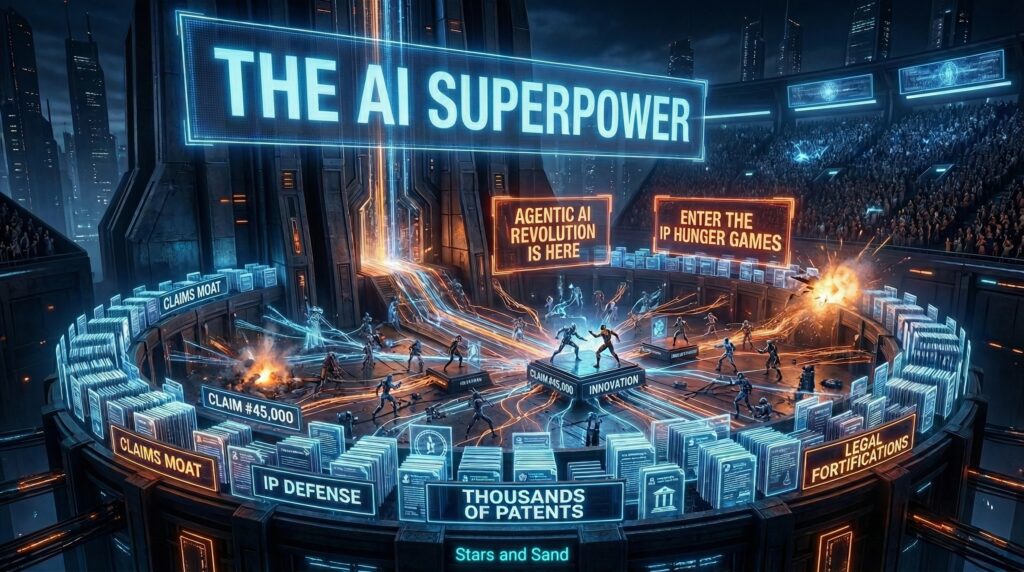
The USPTO is currently undergoing an “agentic AI” revolution, providing human examiners with what Squires calls “superpowers.” But for the strategic applicant, the true power lies in the human bottleneck. A human examiner has exactly 18 hours to vet a patent. By using AI to generate “thousand-claim monsters,” larger entities can “flood the zone” with such extreme complexity that a human examiner cannot possibly keep up.
This is the “Pre-Series A” paranoia play: create “unsettled expectations.” If a patent is too complex to be efficiently examined or challenged, it forces competitors into immediate settlements. Use the “ASAP” (AI-generated pilot program) to front-load the prior art you select. This will steer the examiner toward a favorable outcome before they even open the file.
| Feature | Legacy Examination | The AI Era |
| Examination Time | ~18 Human Hours | 5-Second Search Outcomes |
| Claim Complexity | ~10 Claims (Human Vet) | 1,000+ Claim “Monsters” |
| Search Depth | Manual/Restricted | Agentic AI “Superpowers” |
| Moat Strategy | Technical Merit | Volume and Complexity Flooding |
3. PTAB and the “Quiet Title” Doctrine: The End of the Serial Challenge
The Patent Office successfully reconfigured the Patent Trial and Appeal Board (PTAB) from a “kill squad” for patents into a fortress for incumbents. The transition to “Quiet Title” finality is nearly complete. Under the “One [Join] and Done” rule and the expansion of “discretionary denials,” once a patent survives its first challenge, it is effectively invincible.
Elite entities must recognize that Squires’ admission—that multiple petitions are a “killer” for small entities—is the tactical blueprint. For the large entity, the goal is to trigger an initial challenge early, survive it, and then lean on the “Quiet Title” wall. Furthermore, Issa’s proposed policy of automatic discretionary rejection for patents “beyond a certain number of years” creates a permanent age-based shield. Hold your assets through the initial danger zone, and they become legally untouchable through sheer longevity.
4. The “Tell Us Your Story” Trap: RPI and the National Security Filter
The reinstitution of “Real Party in Interest” (RPI) requirements, via the Corning Optical precedent, has turned transparency into a kill-switch. The mandate for petitioners to “tell their story” is a filter designed to unmask third-party litigation funders and foreign state actors. Squires has been clear. “Foreign Sovereigns or State Actors” are not “persons” under the AIA and can be barred from the PTAB entirely.
For domestic giants, the play is to frame every challenger through a geopolitical lens. If a competitor has any links to “countries that do not respect the rules”—specifically China and military-linked entities like Huawei or Tencent—use the RPI requirement to trigger an automatic discretionary denial. By aligning your defense with the “Department of War” designations, you can eliminate challengers on jurisdictional grounds before they even reach the merits of your patent.
5. Political Camouflage: Lessons from the “Board of Peace”
The most sophisticated form of IP camouflage is the “Political Custodian” model, as demonstrated by the USPTO’s “extraordinary and unprecedented” action regarding the “Board of Peace” trademark. By invoking 35 USC Section 3—the duty to advise the President—Director Squires acted as a “straw holder” for a private entity before it was even legally formed, bypassing the Lanham Act’s “Bona Fide Intent” requirements.
This is the Pre-Series A blueprint:
- Weaponize Section 3: Align your IP with “national security” or “public policy.” This will get the USPTO to act as your custodian.
- Bypass Fees and Rules: Use the “Board of Peace” precedent to secure fee waivers and expedited filings. Under the guise of “preventing cyber-squatting.”
- The Myth of Neutrality: Understand that “neutrality” is for those who cannot afford the alternative. The system will bypass the letter of the law for the “politically well-connected.” Those who claim to serve the “spirit of the law.”
6. Conclusion: The “Central Bank of Innovation” Closed its Vault
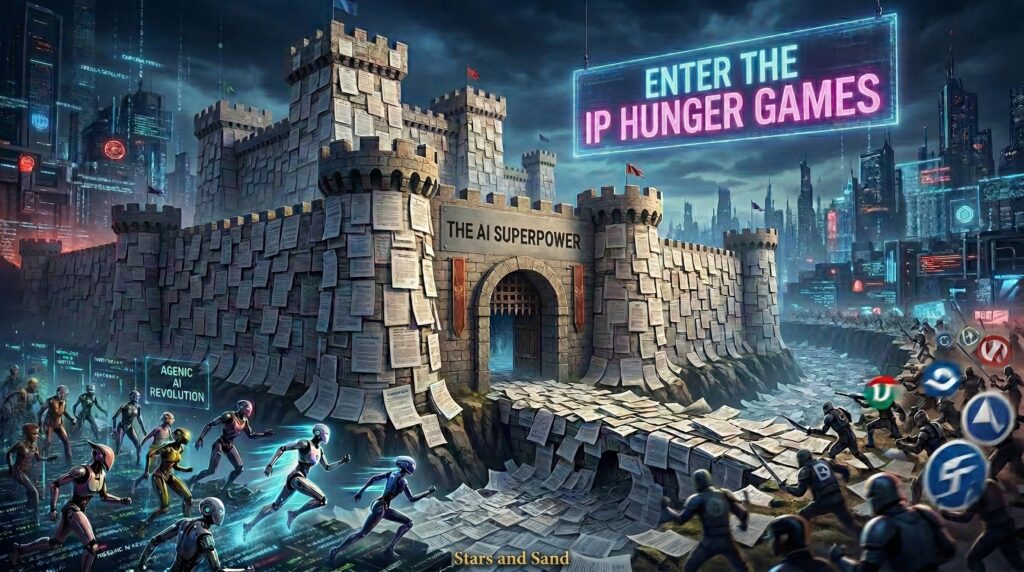
The “Central Bank of Innovation” closed its vault, and set the rules for the Hunger Games. The AI-superpowered examiner and the discretionary walls of the PTAB now enforce the “America First” manufacturing agenda. The Bank’s stability protects “American Manufacturers.” The system as designed will quickly dispense with the interests of offshore entities and “Foreign State Actors” and liquidate their challenges.
In this new virtuous cycle, innovation is not about who has the best idea. It is about who owns the currency and the bank. Prosperity is a closed loop reserved for those who understand that the USPTO is no longer an office of record. It is a command center for the consolidation of global market power. The system closed the vault. Make sure you are the one holding the keys.